
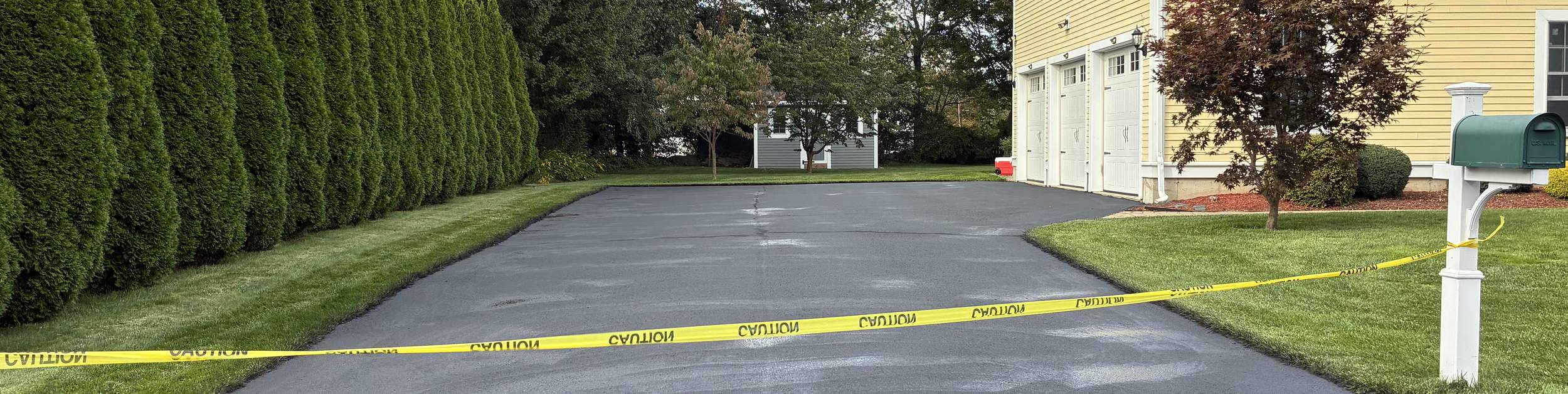
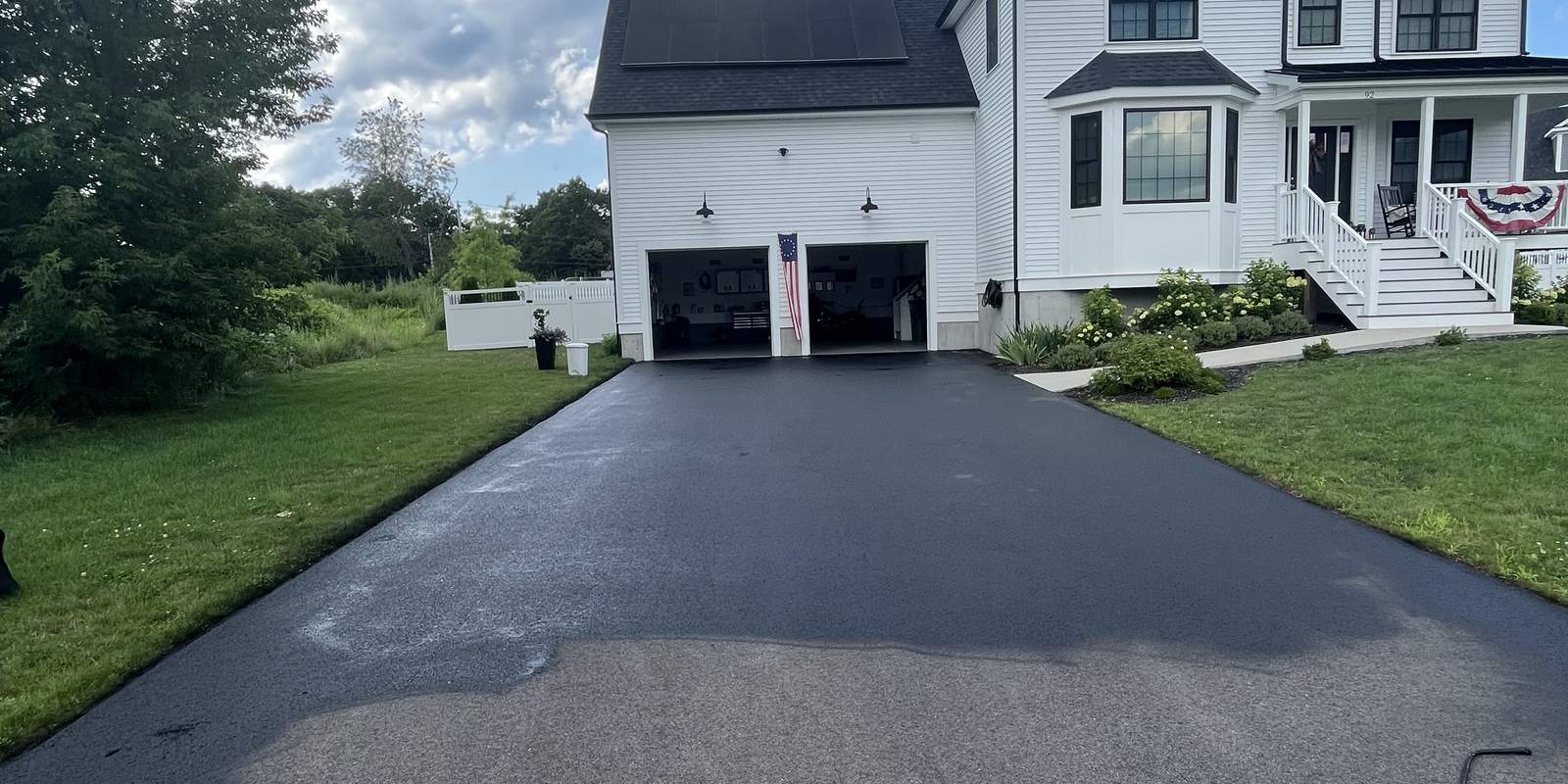

The honest answer: a properly installed and reasonably maintained asphalt driveway in New England should last 20 to 30 years.
That is a wide range, and the reason is simple — what happens in years 0, 1, and 5 has more to do with the final lifespan than what happens in years 20 through 25. This post breaks down what affects asphalt longevity in a Massachusetts climate, what shortens it, and what you can actually do to push toward the upper end of that range.
What "Lifespan" Actually Means
A driveway does not die suddenly. It gets old gradually. So when we say "20 to 30 years," what we really mean is: that is how long until the driveway needs to be replaced, not patched.
There are typically three stages:
- Years 0–10: Good shape. Small cracks may appear and need sealing.
- Years 10–20: Aging visibly. Color fades, more cracks, possibly a few patches. With regular sealcoating, the surface still functions well.
- Years 20–30: Reaching end of life. Cracks deepen, base may start to fail in spots, alligator cracking can appear. At some point, patching stops being economical and replacement makes more sense.
A driveway that gets to year 30 typically had three things going for it: a proper original install, regular sealcoating, and no major drainage problems.
What Shortens an Asphalt Driveway's Life
Most short-lived driveways in New England fail for one of these reasons:
1. Bad Base Prep at Install
The single biggest factor. If the gravel base under the asphalt is too thin, not properly compacted, or sitting on poor-draining soil, the surface starts settling and cracking within a few years. You cannot fix this with sealcoating — it is structural.
This is why the cheapest paving quote is rarely a deal. The savings usually come from cutting prep work that you cannot see but that determines whether the driveway lasts 8 years or 28.
2. Drainage Problems
Water is the enemy of pavement. Water that sits on the surface eventually finds cracks. Water that gets under the driveway erodes the base. Water that pools at the edge freezes in winter and lifts the asphalt.
Good driveways are graded to drain. If yours has standing water after a rain, that is a sign of either initial install problems or settling that should be addressed.
3. Freeze-Thaw Cycles Without Sealing
New England has 30 to 50 freeze-thaw cycles a year. Every cycle is a small stress test on any pavement crack. A driveway that has never been sealed in 15 years has been through 500+ cycles with no protection. A driveway sealed every 2 to 3 years has been protected through most of them.
4. Heavy Vehicles on Residential Spec
Residential driveways are built for cars, not loaded delivery trucks or dumpsters parked on them for weeks. Occasional heavy use is fine. Routine heavy use will compress and damage a residential-grade base over time.
5. Salt and Snow Plowing
Plow blades that dig into asphalt edges chip them. Salt itself does not destroy asphalt directly, but it accelerates the moisture damage by lowering the freezing point and keeping water active for longer. Edges and seams are where this shows up first.
What You Can Do to Extend It
Three things give you the most return for the effort:
Seal It on Schedule
We recommend sealcoating every 2 to 3 years. Done right, this can roughly double the usable life of an asphalt driveway compared to leaving it bare.
Address Cracks Early
A hairline crack in year three is a sealcoating job. The same crack ignored for ten years is a half-inch gap with water damage underneath. Crack filler is cheap insurance.
Watch for Drainage Changes
If you notice water pooling somewhere it never used to, look at it. The fix might be as simple as a downspout extension or a regrade of one corner. Catching this early prevents base damage.
When to Replace vs. Patch
Some general guidance based on what we see most often:
- Patch: Isolated cracks, individual potholes, one corner sinking, small alligator patches.
- Overlay (resurface): Surface is failing but base is solid. New 1.5 to 2 inch asphalt layer over the existing.
- Full replacement: Alligator cracking across most of the surface, multiple sunken spots, or a base that has failed.
A good contractor should tell you straight which category your driveway is in. If somebody recommends full replacement on a driveway that just needs an overlay, get a second opinion.
Bottom Line
A 20 to 30 year asphalt driveway in New England is realistic when:
- It was installed with proper base prep.
- Drainage works.
- It has been sealcoated every couple of years.
- Cracks were addressed before they spread.
If you are at year 15 or 20 and wondering what your driveway needs to make it to 30 — or if you are planning a new driveway and want it done right from day one — reach out for a free estimate. We will give you an honest assessment of where your driveway is in its lifecycle.
For more on our paving work, see our asphalt paving services page or our sealcoating services page.