- 15+ Years Hands-on experience
- Licensed & Insured Full liability & workers' comp
- Free Estimates No-obligation, honest pricing
- South Shore Local Weymouth-focused, family-run
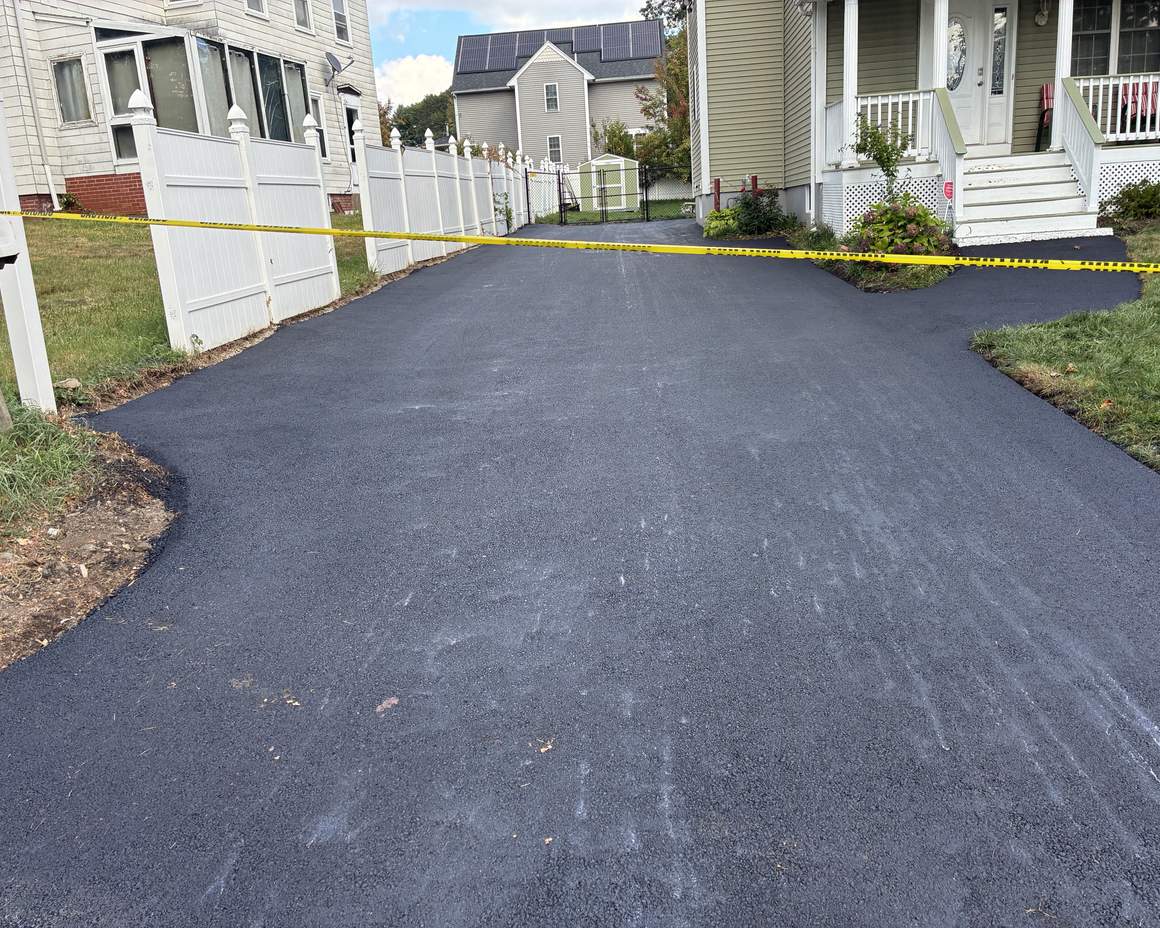
Driveway Sealcoating in Weymouth, MA
Sealcoating is the simplest and cheapest thing you can do to extend the life of an asphalt driveway. A fresh coat protects against freeze-thaw cracking, UV breakdown, oil and gas spills, and the salt that gets thrown around every Massachusetts winter.
We sealcoat residential driveways and small commercial lots across the South Shore. We do it the way it should be done — clean the surface first, fill the cracks, then apply.
- Residential driveway sealcoating
- Crack filling and minor pavement repairs
- Small commercial and parking lot sealcoating
- Honest 2 to 3 year recoat recommendations
Done Right, Not Just Done Fast
Sealcoating is mostly about prep. Skip that and the sealer peels off. Here is how we approach the job.
Clean the Surface
We blow off all dirt, leaves, and loose material, scrape out any vegetation in cracks, and clean any oil spots so the sealer bonds properly.
Fill the Cracks
Cracks wider than a hairline get filled with hot or cold crack filler. Without this step, sealer pools in the cracks instead of sealing them.
Apply the Sealer
We apply two coats of quality asphalt sealer with proper coverage, working edges by hand and the main field with a spray or squeegee depending on conditions.
Cure & Care
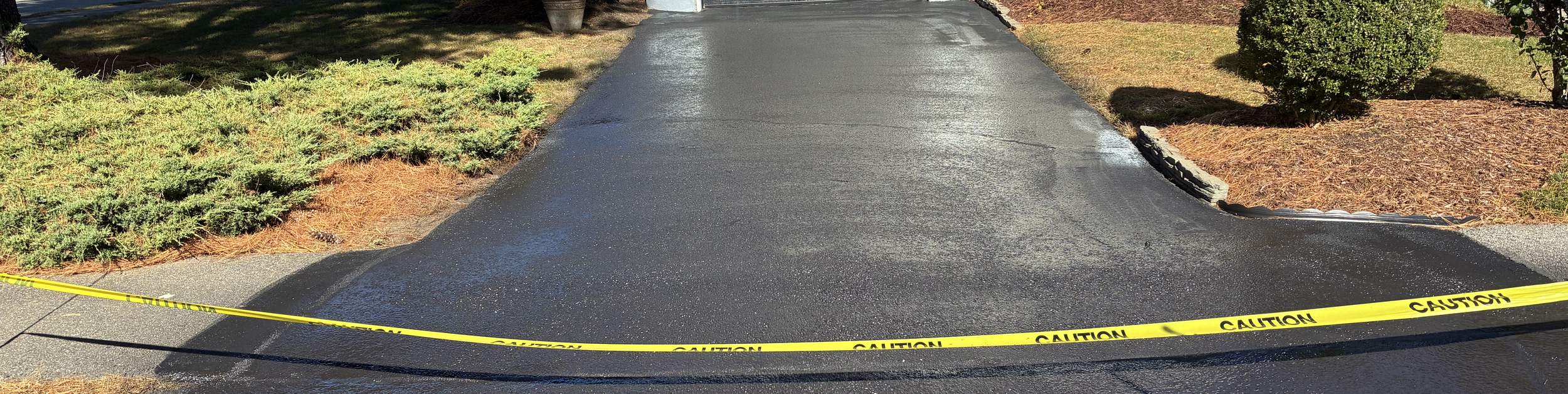
We block off the driveway with cones and walk you through how long to wait before walking or driving on it. Typically 24 hours minimum, longer in cool weather.
Why Sealcoating Matters in Massachusetts
Asphalt is held together by binders that break down over time when exposed to UV, oxygen, water, and the chemicals that end up on a driveway. In New England, freeze-thaw cycles make things worse — water gets into small cracks, freezes, expands, and turns small cracks into large ones.
A fresh sealcoat does two things: it puts a flexible barrier between the asphalt and the elements, and it restores the deep black color that makes a driveway look new. Done every 2 to 3 years, it can roughly double the usable life of an asphalt driveway compared to leaving it unprotected.
When Sealcoating Is — and Is Not — the Right Call
Sealcoating is great preventative maintenance. It is not a fix for serious damage.
- Sealcoat: hairline to small cracks, fading color, surface oxidation, normal wear.
- Crack fill plus sealcoat: moderate cracks, a few oil stains, surface that is starting to show age.
- Skip sealcoating — do something else: deep alligator cracking, potholes, soft spots, or a failed base. Sealer on a failing surface is wasted money. We will tell you straight if your driveway needs paving or patching instead.
Service Area
We sealcoat driveways across the South Shore, most often in Weymouth, Quincy, Braintree, Milton, Randolph, Canton, Dedham, and Hingham. Reach out and we will let you know if we can get to your town.
Sealcoating Questions, Answered
The most common questions homeowners ask before booking a sealcoating job.
How often should I sealcoat my driveway?
Every 2 to 3 years is the sweet spot in New England. Sealing too often (every year) is overkill and can lead to peeling. Waiting too long means the surface starts breaking down before the next coat goes on.
When can I drive on it after sealcoating?
Freshly sealcoated asphalt typically needs at least 24 hours before vehicle traffic — longer in cool or humid weather. Foot traffic can usually resume a few hours sooner. Exact cure times vary with temperature and humidity on the day of application.
How long after a new driveway should I wait to sealcoat?
Wait at least 6 months to a year after a new asphalt driveway is installed. The asphalt needs time to fully cure and release surface oils before sealer is applied. Sealing too soon traps those oils and can cause issues.
What is the best time of year to sealcoat?
Late spring through early fall, when temperatures stay above 50°F day and night, is the practical sealcoating window in Massachusetts. Sealcoat should not be applied right before forecasted rain — moisture before the sealer cures is the most common cause of poor results.
Can you sealcoat over a driveway with cracks?
Small cracks: yes — crack filling is done first before the sealer is applied. Large cracks, alligator cracking, or potholes need structural repair or repaving before sealcoating is worthwhile. Sealer is a surface protection product, not a structural fix. Every estimate includes a clear read on which option fits the driveway.
Other Work We Do
We handle more than sealcoating. Here are a few of our other South Shore services.
Asphalt Paving
New driveway installation, full replacements, and parking lot paving across the South Shore.
Asphalt PavingAsphalt Repair
Pothole patching, crack filling, and edge repair. Often paired with sealcoating to lock the repair in.
Asphalt RepairDriveway Drainage
Trench drains, French drains, regrading, and downspout tie-ins to keep water off the driveway.
Driveway Drainage
Ready to Start Your Project?
Get a free, no-obligation estimate on asphalt paving, repair, sealcoating, driveway drainage, or any of our services. Serving Weymouth, Quincy, Braintree, Milton, Randolph, and the entire South Shore.