
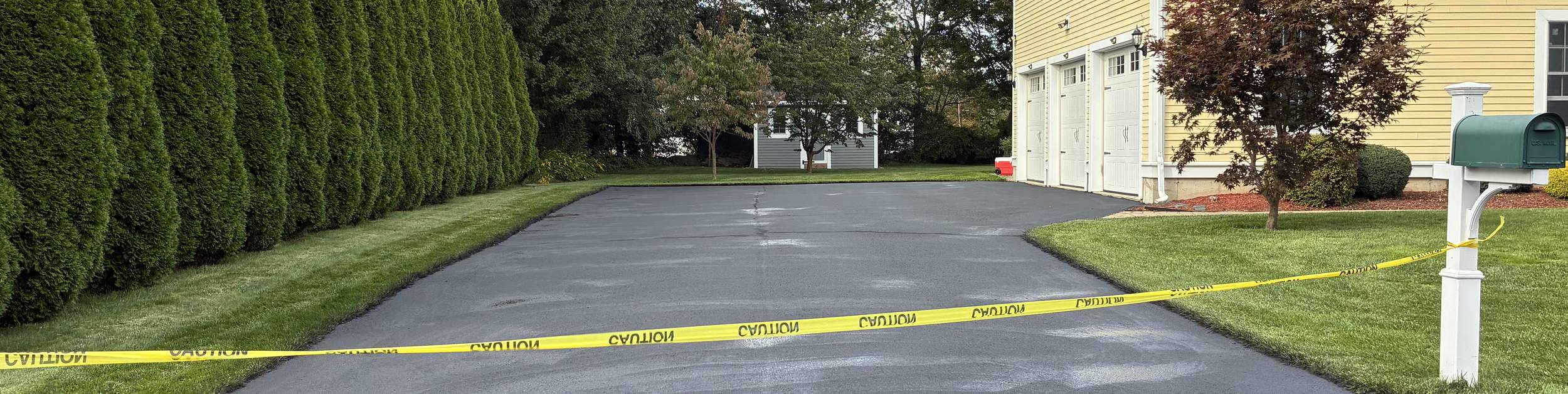
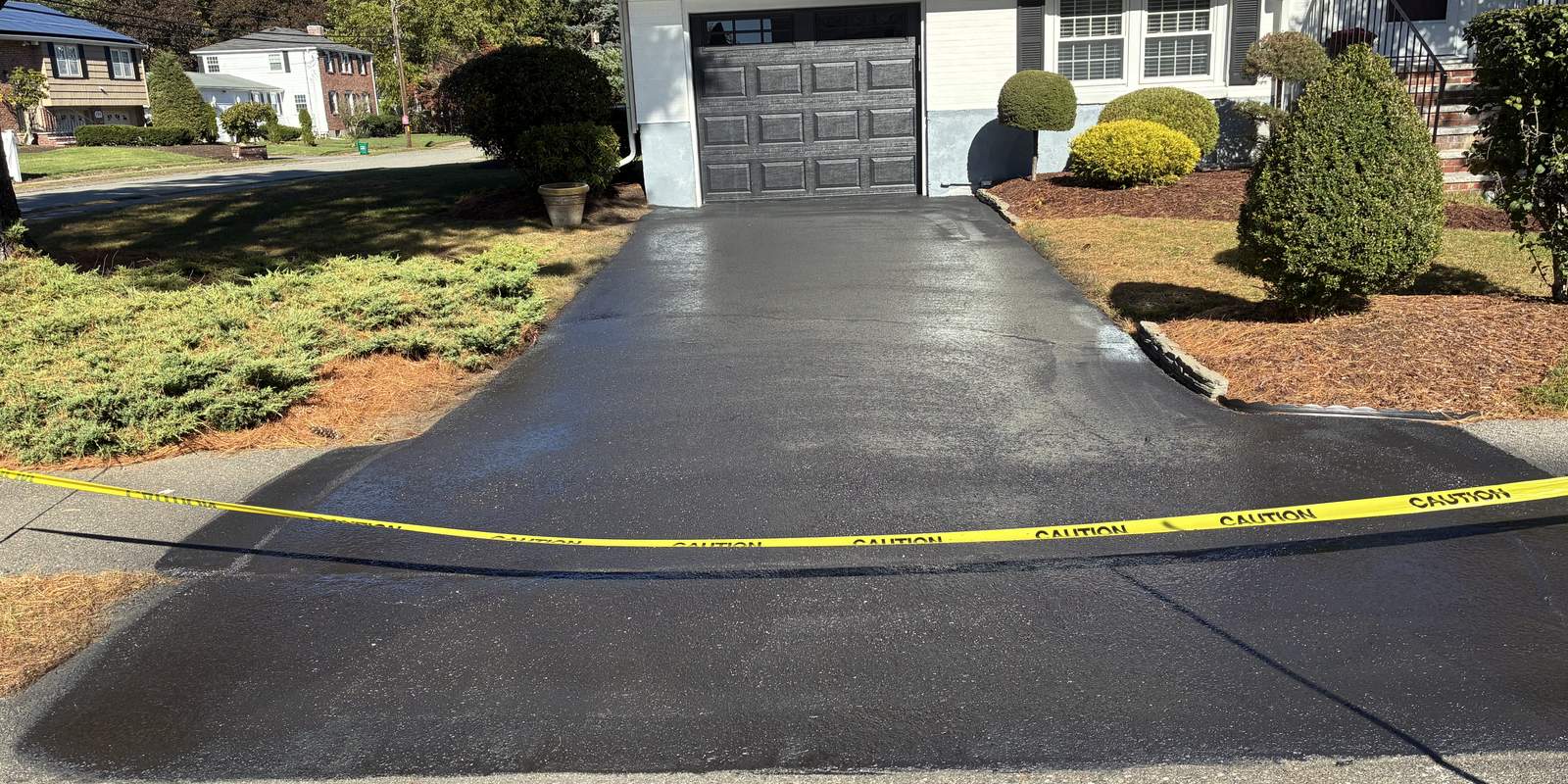

Sealcoating is one of the simplest and cheapest things you can do to keep an asphalt driveway in good shape — but only if it is done at the right time, and only if the driveway is actually a candidate for it.
We get a lot of calls from South Shore homeowners asking whether their driveway needs to be sealed. Here is how we look at it.
Five Signs You Are Probably Due
1. Fading from Black to Gray
A fresh sealcoat is deep black. Over time, sun and weather oxidize the surface and the color fades to a dull gray. By the time the driveway has gone fully gray, the protective binders in the asphalt itself are starting to break down too.
If your driveway is more gray than black, it is time.
2. Hairline Cracks Across the Surface
Small surface cracks — the kind you can barely fit a credit card into — are normal as asphalt ages. Sealcoating fills these and slows them from getting worse. Catching cracks early is the difference between sealcoating in a year and full repaving in five.
3. Two or Three Years Since the Last Sealcoat
We generally recommend a fresh coat every 2 to 3 years in Massachusetts. Any more frequent than that is overkill and can actually cause peeling. Any less frequent and you lose the protection right when New England freeze-thaw cycles start doing damage.
Mark it on your calendar like an oil change.
4. Water Beading is Gone
Pour a glass of water on a well-sealed driveway and it will bead and run off. On a driveway that needs sealing, the water soaks in within a few seconds. That moisture is what causes most of the damage — it gets into small cracks, freezes, expands, and turns small cracks into big ones.
If your driveway is absorbing water like a sponge, it has lost its protective layer.
5. Oil Spots are Sticking Around
Sealcoat resists oil and gas. An aging surface absorbs them. If oil drips from a car are leaving permanent stains, the binder is failing and a sealcoat would help restore some of that resistance.
Three Situations Where Sealcoating Is the Wrong Call
This is the part contractors do not always tell you. Sealcoating is not a fix for everything.
Alligator Cracking
If your driveway has interconnected cracks that look like the back of an alligator, the base underneath has failed. No amount of sealer fixes that. You need either patching or repaving. Sealing over alligator cracking is wasted money.
Potholes
Same idea — a pothole is a structural problem, not a surface problem. We patch potholes first, sometimes wait for them to settle, then seal if the rest of the driveway is in shape.
A Brand-New Driveway
This is the most common mistake. Freshly paved asphalt needs 6 to 12 months to cure before it should be sealed. The surface needs to release its own oils and stabilize. Seal it too soon and you trap moisture and oils underneath, which can cause issues later.
If your driveway was paved this year, wait until next year at minimum.
What an Honest Sealcoating Visit Looks Like
When we come out for a sealcoating estimate, we walk the whole driveway with you. We look at:
- Surface condition and color
- Cracks (how deep, how wide, how interconnected)
- Drainage and standing water
- Edges and the transition to the road or garage
- Any soft spots underfoot
About 70% of the time, sealcoating is the right call and we will quote it. The other 30% of the time, we tell people honestly — your driveway either needs patching first, repaving, or nothing yet. We would rather give you a free walk-through and the right answer than sell a sealcoat you did not need.
Want a Free Walk-Through?
If you are on the South Shore — Weymouth, Quincy, Braintree, Milton, Randolph, or surrounding towns — and your driveway is looking gray, reach out for a free estimate. We will tell you straight whether it is time.
For more on what sealcoating involves, see our sealcoating services page.